
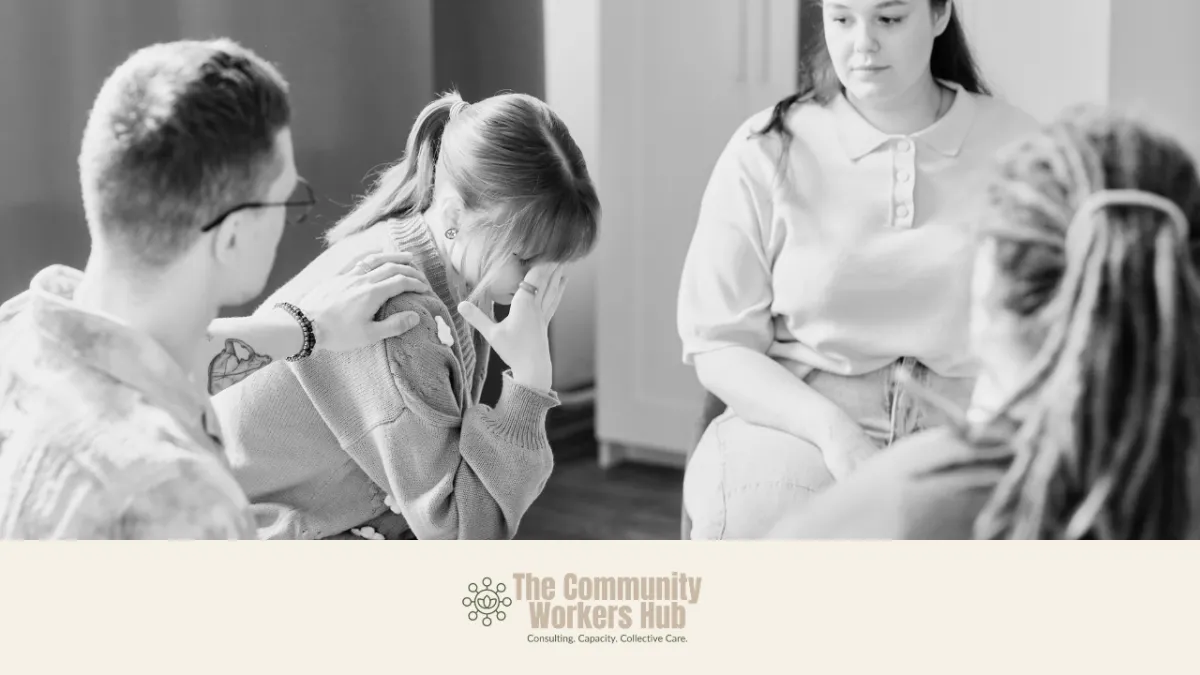
Building Safety and Trust in Service Relationships
Building Safety and Trust in Service Relationships
Why These Foundations Matter in Every Helping Profession
In community work, trust isn’t a given; it’s earned.
Every interaction, every word, and every follow-up contributes to a sense of safety that allows clients to engage, heal, and grow. Yet, for many people who have experienced trauma, discrimination, or systemic harm, safety and trust are not easily established.
That’s why Building Safety and Trust in Service Relationships is one of the most essential learning opportunities for today’s community workers, case managers, and support professionals.
Why Safety and Trust Are Foundational
At the heart of trauma-informed and person-centred practice is an understanding of how people respond to safety and threat. When clients don’t feel safe, their ability to connect, reflect, and make decisions is compromised. This impacts the delivery of services and the outcome for the client.
This course explores the practice behind trust, highlighting how predictability, presence, and transparency can shift relationships from guarded to genuine.
Building Trust in Everyday Interactions
Trust doesn’t only come from big gestures; it’s built in the small, consistent moments.
Through practical examples and reflection activities, participants learn how to:
Listen with attunement and empathy
Communicate transparently about boundaries and expectations
Follow through on commitments
Avoid microaggressions and re-traumatisation in daily interactions
The goal is to move beyond “good intentions” and into practices that actively support emotional safety.
Creating Emotionally and Culturally Safe Spaces
True safety considers more than just physical environments. It extends into the emotional, psychological, cultural, and relational spaces between people. While secure buildings and clear procedures matter, individuals can be physically safe yet still feel profoundly unsafe if the environment echoes past trauma, disempowerment, or exclusion.
Emotional and psychological safety emerge through empathy, consistency, and the ability to speak openly without fear of judgment or punishment. Cultural and identity safety requires that people’s backgrounds, experiences, and identities are respected and represented, free from bias or tokenism. Relational safety grows through trust, transparency, and shared decision-making, while organisational safety depends on systems that prioritise dignity, accountability, and rights-based practice. True safety is not simply the absence of harm, but the active presence of trust, belonging, and respect, a space where people feel seen, heard, and free to be themselves.
Reflecting on Power, Privilege, and Practice
Trust grows when power is shared.
Reflecting on power, privilege, and practice invites us to examine how our roles, systems, and interactions either reinforce or redistribute power. In community and care settings, power imbalances are often built into structures, such as those between workers and clients, policymakers and communities, or organisations and the people they serve. Recognising this doesn’t mean rejecting our professional authority; it means using it consciously and ethically to create equity and trust. When we share decision-making, value lived experience as expertise, and invite genuine collaboration, we shift from “doing for” to “working with.” Trust grows in these moments, when people experience transparency, respect, and the freedom to influence what affects them. Reflecting on power is not a one-time exercise but an ongoing commitment to awareness, humility, and accountability in practice.
Course Snapshot
Duration: 2 hours (self-paced, online)
Designed for: Community workers, case managers, disability and aged care workers, youth workers, and DFV practitioners
By the end of this course, participants will be able to:
- Understand how safety and trust underpin effective, trauma-informed practice
- Identify what supports or undermines emotional and cultural safety
- Build rapport and trust through consistent, respectful engagement
- Apply practical strategies that strengthen relationships and outcomes
A Step Toward Collective Care
Building safety and trust isn’t just about individual practice; it’s about transforming systems to be more compassionate, responsive, and inclusive.
This course is an invitation to slow down, reflect, and reimagine what service relationships could look like when safety and trust come first.
Join The Hub to strengthen your practice: www.tcwh.com.au/the-hub


