
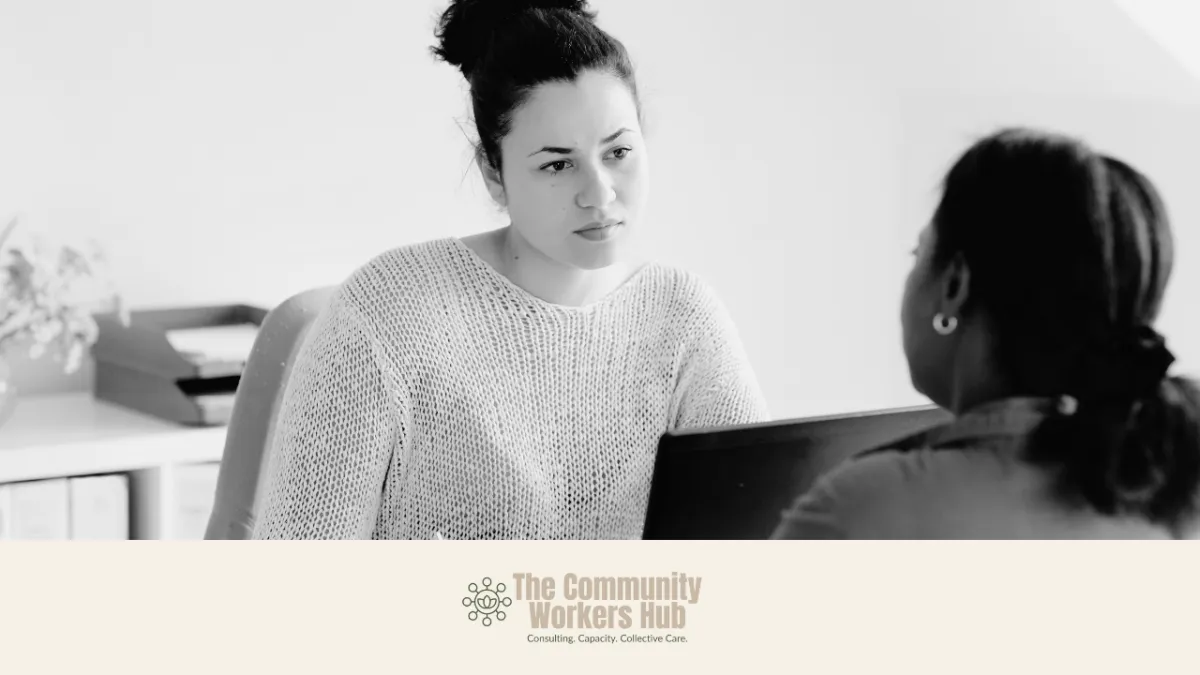
The Power of Listening: What Happens When We Really Hear Someone
The Power of Listening: What Happens When We Really Hear Someone
Published: Friday, 23 January 2026
Category: Communication & Relationships
Reading time: 6 minutes
Here's something we don't talk about enough in community services: Most of us are terrible listeners.
Not because we don't care. But because we're trained to solve problems, assess needs, and move things forward. While someone's talking, we're already formulating responses, thinking about referrals, planning interventions.
We're hearing words. But we're not really listening.
And here's the paradox: The less we truly listen, the less effective everything else we do becomes.
What Real Listening Actually Is
Real listening—what some call "deep listening" or "generous listening"—is different from the listening most of us default to.
It's not:
Waiting for your turn to talk
Preparing your response while someone speaks
Listening for specific information you need
Thinking about how to fix the problem
Judging whether what they're saying makes sense
Real listening is:
Being fully present with someone
Suspending your own agenda
Allowing silence and space
Noticing what's underneath the words
Trusting that being heard is itself healing
Why Listening Feels So Rare
Think about the last time someone truly listened to you. Not just heard you, but really listened. How did it feel?
Now think about how often you get to experience that.
Most conversations involve what we might call "transactional listening"—listening for specific information or outcomes. This is fine for logistical conversations. But it's completely insufficient when someone is struggling, hurting, or trying to make sense of their life.
People accessing community services often have profound experiences of not being heard:
By systems that reduce them to case numbers
By services that tell them what they need instead of asking
By family members who've stopped listening
By a society that doesn't value their voice
When you offer genuine listening, you're offering something increasingly rare. And it matters more than most interventions we provide.
The Gifts Listening Offers
1. It Creates Safety
When someone feels truly heard, their nervous system relaxes. They move from defence into openness. This is why listening is foundational—it creates the safety that makes everything else possible.
2. It Helps People Think
Psychologist Nancy Kline talks about how the quality of our thinking depends on the quality of attention we receive. When someone listens without interruption or judgment, we can think more clearly, access our own wisdom, and make connections we couldn't make alone.
In practice: Often when you say, "Tell me more about that," people discover their own answers.
3. It Communicates Respect
Listening says: "Your experience matters. Your perspective is valid. You are worth my time and full attention." For people who've been repeatedly dismissed or invalidated, this is profound.
4. It Builds Connection
Real listening creates intimacy—not in a romantic sense, but in the sense of truly seeing and being seen. This connection is what allows real support to happen.
5. It Reveals What's Really Going On
Surface problems often aren't the real problems. When you listen deeply enough, people tell you what's actually happening—not just what they think you want to hear or what seems "appropriate" to share.
The Barriers to Listening
If listening is so powerful, why don't we do it more?
Time pressure: Many services are so stretched that workers feel they don't have time to "just listen."
Action bias: We're trained to do something, not to simply be present.
Discomfort: When someone shares pain, sitting with it without trying to fix it can feel unbearable.
Our own triggers: Sometimes what people share activates our own stuff—memories, fears, unresolved pain.
Technology: Note-taking on computers, checking phones, or recording appointments all reduce presence.
Organisational culture:If your workplace doesn't value listening—if it's all about throughput and targets—it's hard to prioritise it.
How to Listen Deeply: Practical Skills
1. Prepare Yourself
Before meeting with someone:
Take a few breaths
Set aside your own concerns
Commit to being present
Let go of having to "achieve" anything
2. Create Space
Physically: Face the person. Put away devices. Remove barriers (like desks) if possible. Let your body language show openness.
Temporally: Don't schedule back-to-back appointments if you can help it. Rushing undermines listening.
3. Start with Open Questions
Instead of launching into an agenda, try:
"What's been happening for you?"
"What feels most important to talk about today?"
"Where would you like to start?"
4. Cultivate Stillness
Resist the urge to fill every silence. Pauses allow people to go deeper, to find words for things they haven't yet articulated. Your comfort with silence gives them permission to think.
5. Listen for What's Underneath
Pay attention to:
Tone of voice
Body language
What's not being said
Emotions beneath the words
Patterns across their story
6. Reflect, Don't Redirect
When you do speak, offer reflection rather than redirection:
✅ "It sounds like you're feeling really overwhelmed."
❌ "Have you thought about making a to-do list?"
✅ "There's a lot of grief in what you're sharing."
❌ "At least you have your children."
✅ "What I'm hearing is..." (then summarise)
❌ "What you should do is..."
7. Ask Permission Before Pivoting
If you need to ask specific questions or shift topics:
"Would it be okay if I asked you about...?"
"Is this a good time to talk about [practical matter]?"
"I'm wondering if we could explore..."
This maintains their agency even as you introduce structure.
8. Trust the Process
You don't have to have answers. You don't have to fix things. Your job is to be present, to witness, to affirm that their experience matters.
Often, that's enough.
Common Listening Traps
The Advice Trap: Jumping straight to solutions without fully understanding the problem.
The Comparison Trap: "I know exactly how you feel, when I..."
The Positive Reframe Trap: "Look on the bright side..." or "At least..."
The Therapy Trap: Analysing or interpreting rather than witnessing.
The Saviour Trap: Taking on responsibility for solving problems they're capable of solving themselves.
The Urgency Trap: Rushing to outcomes because of time constraints rather than trusting the value of being heard.
When Listening Is Hard
Sometimes listening is genuinely difficult:
When someone shares trauma: You might feel overwhelmed or want to distance yourself. Breathe. Stay present. You don't need to fix their pain—just witness it.
When you disagree strongly: You can listen fully and still hold different views. Listening doesn't equal agreement.
When someone is very distressed: Your presence and calm attention can help regulate their nervous system. You don't need to make the distress go away.
When you're triggered: If what they're sharing activates your own unresolved stuff, acknowledge this (to yourself or in supervision) and get support.
Listening Across Difference
Listening becomes more complex when you're working across differences of culture, class, disability, or experience.
You might not understand the context: That's okay. Ask. Be curious. Don't pretend to understand if you don't.
Cultural norms around communication differ: Some cultures value direct eye contact; others find it disrespectful. Some share personal information readily; others need time and trust. Learn, and let people guide you.
Power dynamics matter: If you're a white worker listening to an Aboriginal client, or a non-disabled worker listening to a disabled person, be aware of the history and current power imbalances. Your listening needs to account for this.
The Ripple Effects
When you listen deeply, something remarkable happens: People often start listening more deeply to themselves. They reclaim their own authority, their own knowing.
And they start listening differently to others—partners, children, friends. Deep listening is contagious.
In community services, we often focus on what we can give people: resources, referrals, advocacy, and practical support. These matter.
But never underestimate the power of truly hearing someone. In a world that constantly talks over people, dismisses them, or reduces them to problems to be solved, being genuinely listened to is radical.
It says: You matter. Your story matters. I see you.
And sometimes, that changes everything.
Key Takeaways
Deep listening means being fully present without agenda, judgment, or the need to fix
Most people experience profound hunger to be truly heard
Listening creates safety, enables thinking, builds connection, and reveals what's really happening
Common barriers include time pressure, action bias, discomfort, and our own triggers
Practices include creating space, asking open questions, embracing silence, and reflecting rather than redirecting
Reflection Questions
When was the last time you felt truly heard? What made that experience different?
What makes it hard for you to listen deeply in your work?
What's your default listening trap? (advice-giving, comparing, reframing?)
How might your practice change if you saw listening as your primary intervention?
Further Learning
Interested in developing your listening and presence skills? The Community Workers Hub offers:
The Art of Listening: Holding Space for Real Conversations- Deepening skills in presence and deep listening
Conflict-Resilient Communication- Using listening to navigate difficult conversations
Building Safety and Trust in Service Relationships- Creating conditions for honest communication
Join The Hub for professional development that honours the relational heart of community work.
Sarah Smallman is a community services professional and founder of The Community Workers Hub, passionate about centring relational practice in frontline work.


